
Tech Stack
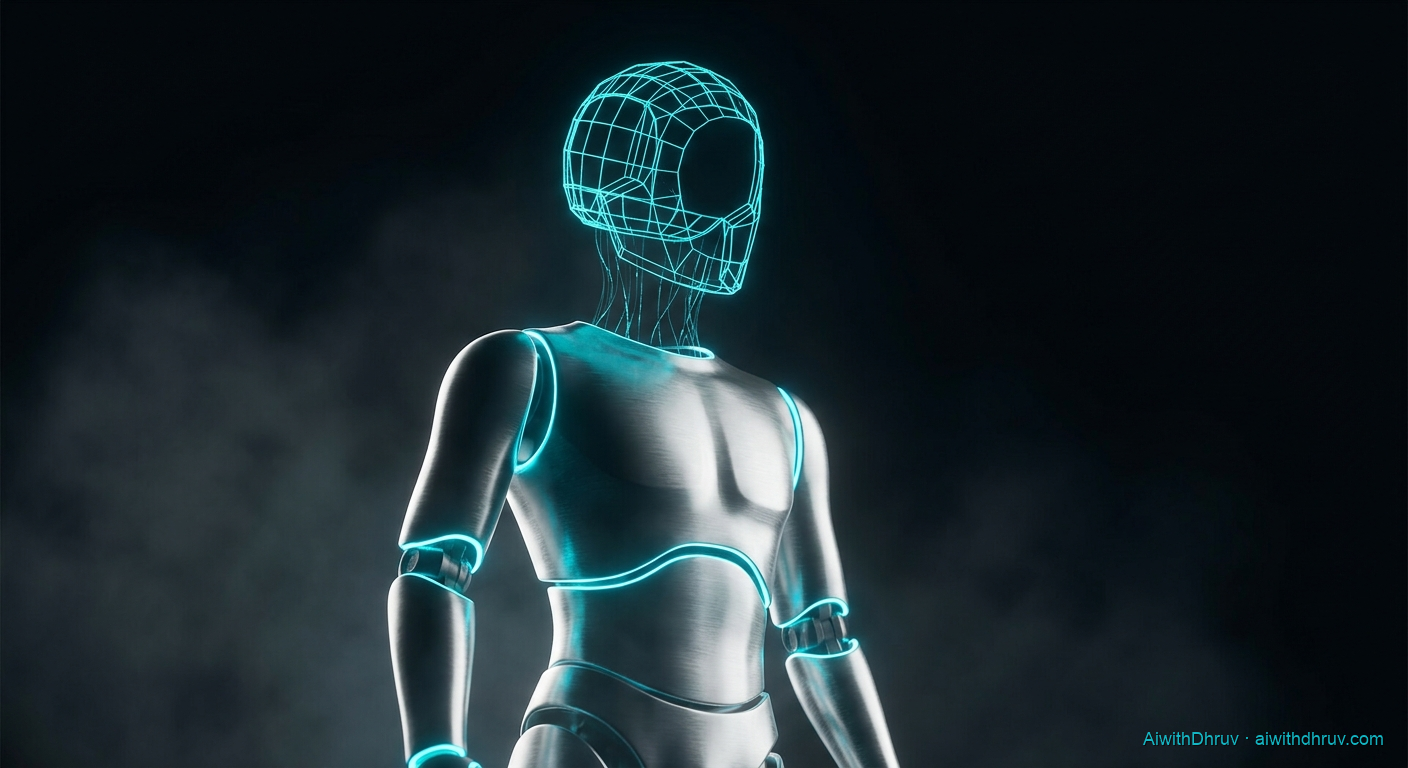
On July 16, 2026, in the Nanshan Culture and Sports Center in Shenzhen, a humanoid robot took a kick to the head. The head rocked loose in its socket, hung by cabling for a moment, and a second kick sent it off the body entirely.
The robot kept fighting.
That clip went around the world in about a day. I watched it like everyone else. Then I did the thing I always do before I repost anything: I went looking for the primary sources. What I found was more interesting than the decapitation — and more honest than most of the coverage.
What actually happened in Shenzhen
The event was URKL — Ultimate Robot Knock-out Legend — organised by the Shenzhen robotics company EngineAI. It is being described as the world's first full-size humanoid combat tournament, and the format is the part worth studying.
Every team fought with the same base machine: EngineAI's T800 humanoid. Teams could not buy an advantage in hardware. What they could change was armour, engineering optimisation, software and tuning. More than 200 teams from ten countries registered; 32 made the main draw after online simulation qualifiers, including groups from UC Berkeley, Stanford, Tsinghua and Zhejiang. The prize pool was 10 million yuan, roughly 1.48 million dollars. Donnie Yen sat ringside.
A standardised platform with a software-only differentiator is not a gimmick. It is a benchmark. When every competitor runs identical hardware, the results isolate one variable: how well you can control a body. That is a genuinely useful thing to measure, and it is why this event matters more than the viral clip suggests.
The question nobody is answering
Here is where I have to be straight with you, because I nearly published something wrong.
My first read of the coverage said the robots were teleoperated — human pilots driving every punch. It is a claim that appears on several aggregator sites. So I went to the primary sources to confirm it.
Global Times covered the event and does not say. Newsweek does not say. Interesting Engineering does not say. Common Dreams does not say. Shenzhen's own municipal outlet goes the other way, describing "real-time visual feedback to drive an autonomous decision-making loop" and teams competing through "software algorithms, parameter tuning and other system optimizations."
So the honest position is this: the control architecture of these matches has not been clearly disclosed, and the sources that do comment point toward autonomy rather than away from it. I could not verify teleoperation, and I am not going to assert it.
I think the silence is the story. We have arrived at a moment where you cannot tell, by watching a humanoid robot move, whether a human is driving it. That was not true three years ago. The uncanny part of that clip is not the missing head. It is the ambiguity.
What did get solved: the body
Strip away the spectacle and there is real engineering underneath.
Losing a head means losing mass off the top of a moving, balancing body — an instantaneous change to the system's centre of mass and inertia, mid-fight, unplanned. Staying upright through that is whole-body control working properly. Reports note the machine continued operating on torso-based control after its head-mounted sensing was removed. Whatever else is true about that fight, that recovery is not theatre.
The T800's published compute is an Intel N97 paired with an NVIDIA AGX Orin module, quoted around 275 TOPS. That is a meaningful amount of onboard inference for a machine that also has to run balance and actuation loops.
And this is not an isolated result. A week earlier, 1X put a new hand on its NEO humanoid: 25 degrees of freedom across the hand and wrist, motors housed in the forearm pulling artificial tendons the way your forearm pulls your fingers, positioning accuracy quoted at ±0.2 mm, thumb torque of 3.5 Nm, fingertip force up to 45 N, wrist joints rated past two million cycles, IP68, food-safe materials.
Two design choices in that hand tell you where the field's head is at.
First, the gear ratios are deliberately low — roughly 5:1 to 15:1, far softer than industrial grippers. Low ratios cost clamping strength and buy backdrivability: push the hand and it yields, and every joint natively senses force. For a machine meant to operate around your family, weak-but-aware beats strong-but-blind.
Second, the fingertips sense shear, not just pressure. Grip force tells a robot it is holding something. Shear tells it the object is starting to slip. That is the difference between holding a glass and catching one.
The pattern: force and delicacy in the same year
Put those two events side by side and you get the real headline of 2026.
The same class of hardware that can knock a head off a humanoid can also hold a glass of water without crushing it. Enough force to do damage. Enough control not to. We spent a decade watching robots struggle to walk across a stage without falling. Now they fight and they pour, in the same twelve months.
The body problem — actuation, balance, tactile sensing, durability, cost — is closing fast. It is not solved, but it is clearly on a trajectory.
The intelligence problem is not on the same trajectory.
Why the bottleneck is data, not motors
Here is the part that matters for anyone building AI rather than watching it.
A humanoid body is only useful if something can drive it competently in situations it has never seen. That requires enormous quantities of real-world interaction data — contact, failure, recovery, the messy physics of a kitchen. That data does not exist at anything like the scale of internet text.
Which is exactly why teleoperation, wherever it is used in this industry, is not the embarrassment people treat it as. A human piloting a robot is a data-collection engine. Every teleoperated hour produces labelled demonstrations of a real body doing a real task in the real world. You pilot to collect, you train on what you collected, and autonomy grows in the gap. Companies that stay quiet about the ratio of piloting to autonomy are usually not hiding failure — they are hiding a roadmap.
So the correct question when you see a robotics demo is never "is it fake?" It is: what fraction of this was autonomous, and is that fraction growing? Nobody who publishes a demo volunteers that number. Ask for it anyway.
How to read robotics news without getting fooled
A short field guide, from someone who builds the software side and has been wrong at least once this month:
Check whether autonomy is stated or implied. Coverage that never mentions control architecture is telling you something by omission.
Prefer the primary source over aggregators. I traced my own near-miss to secondary sites summarising each other. The original event coverage and the manufacturer's own material disagreed with the summaries.
Separate manufacturer specs from independent verification. Every number in this piece that comes from EngineAI or 1X is a manufacturer claim. No independent teardown exists for either yet. That does not make them false; it makes them unconfirmed.
Watch cut rates and edits. Continuous single-take footage of a robot recovering from an unplanned disturbance is worth more than ten cuts of flawless motion.
Ask what happens when it fails. The recovery is the capability. Anyone can show you the success.
Where this actually leaves us
I do not find this frightening, and I think the fear framing is lazy. Nothing in Shenzhen showed a machine deciding anything about a human being.
What it showed is that the physical layer is arriving faster than the cognitive one. We are going to have capable bodies before we have trustworthy minds to put in them. That gap — probably a few years wide — is the most consequential engineering window of our working lives, because everything depends on what we choose to put in charge of those bodies, and on whether the people building them tell us the truth about how much is autonomous.
That is not a hardware question anymore. It is a judgment question, and it belongs to us.
Somewhere a fifteen-year-old watched that decapitation clip and found it completely unremarkable — the way we felt when the internet showed up and the adults were still calling it a fad. In twenty years they will not remember a world where a walking, punching, glass-holding machine was strange.
We are not heading into that era. We are already standing in it. The only real choice left is how honestly we describe it while it happens.
Every specification in this piece is sourced from EngineAI's and 1X's published material or from primary event coverage, and labelled as a manufacturer claim where it is one. Where the sources are silent — most importantly on match autonomy — I have said so rather than guessed. If you have primary documentation on URKL's control rules, I would genuinely like to see it.
Want to build something like this?
I architect and deploy end-to-end AI systems — from MVP to revenue.
Let's TalkOr ask Angelina — my AI twin in the bottom-right corner. She knows my full build history, live GitHub, and how I'd approach your project.